 Image 1 of 2
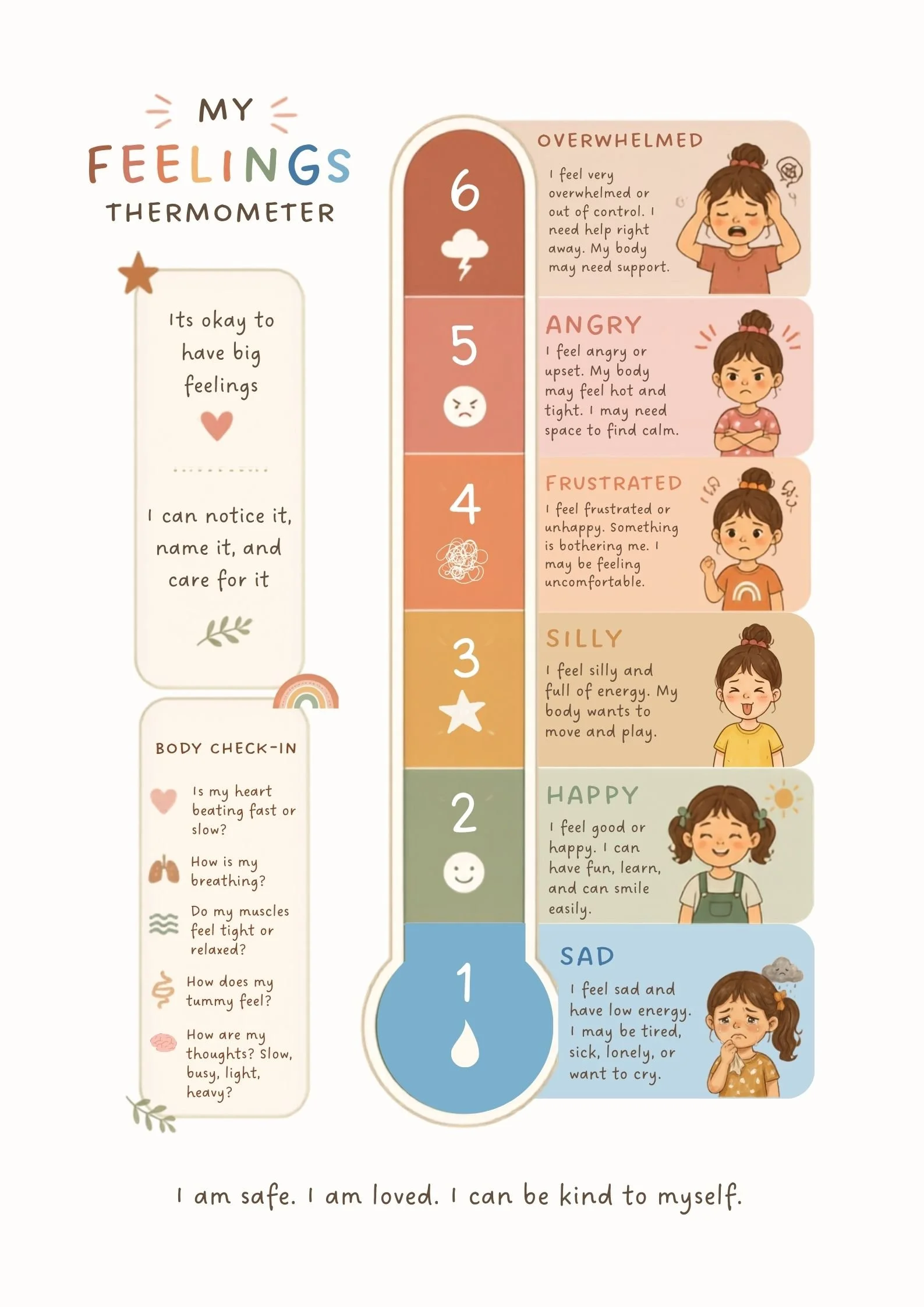 Image 2 of 2
💛 Give kids the words for what their body is already telling them.
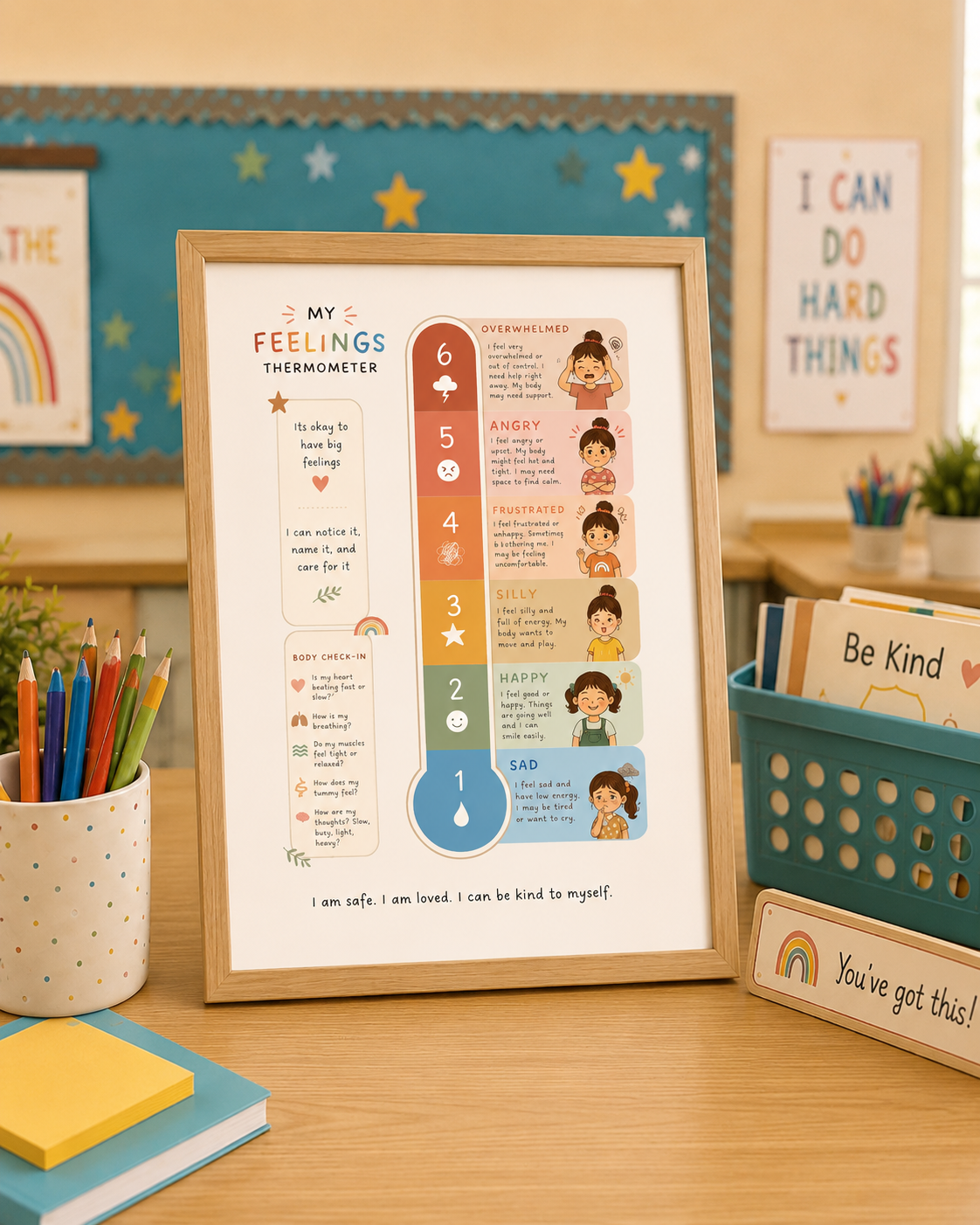
Designed with a pediatric occupational therapist’s eye for sensory-informed emotional learning, this Feelings Thermometer walks kids from sad and happy all the way up to angry and overwhelmed — connecting each emotion to what it actually feels like in the body, not just a label on a chart.
☀️ What’s included:
• A 6-point feelings thermometer: sad, happy, silly, frustrated, angry, overwhelmed
• Simple, relatable descriptions for each feeling level, written in a child’s voice
• Two versions in one download! Boy & Girl options
• A “Body Check-In” section prompting kids to notice heart rate, breathing, muscle tension, tummy, and thoughts
• Grounding affirmations: “I am safe. I am loved. I can be kind to myself.”
✨ Why it works:
• Interoception — noticing internal body signals — is a foundational skill in emotional regulation and a core focus in pediatric OT
• Naming a feeling and locating it in the body helps kids move from reacting to responding
• A visual scale gives kids and adults a shared, low-pressure way to check in (“Where are you on the thermometer today?”)
• Normalizes the full range of emotions, including the big, uncomfortable ones
✔️ Great for:
• Home calm-down corners
• Classrooms, school counseling offices, and daily check-ins
• OT, speech, and therapy treatment rooms
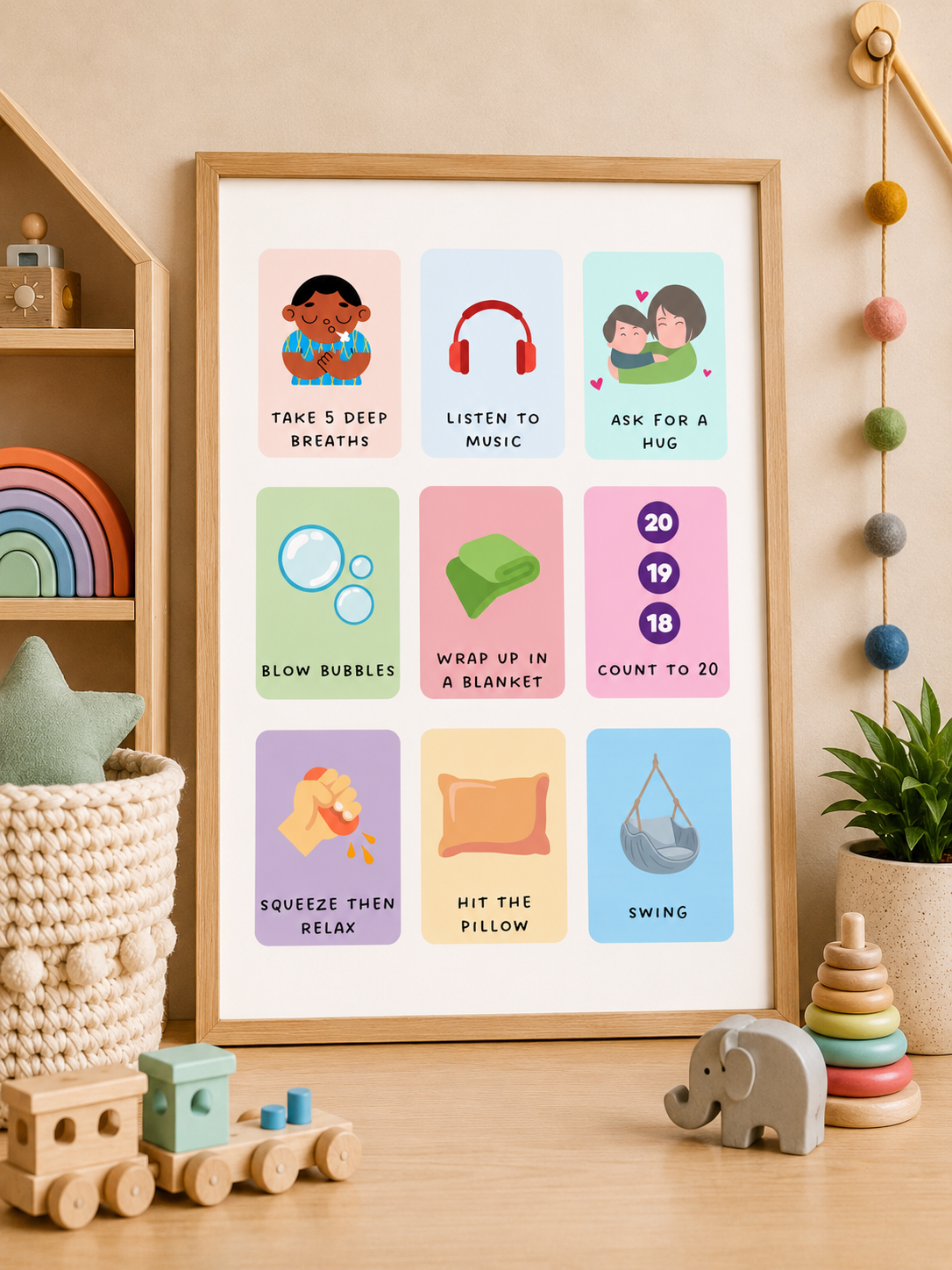
• Pairing with a calming strategies poster for a full regulation station
🌱 Details:
• Instant digital download — no physical item will be shipped
• Print at home, at a local print shop, or through an online printing service
A note from Dr. Meghan, the Occupational Therapist and designer:
Before kids can regulate a feeling, they need to notice it. This thermometer was built to make that noticing concrete — turning “I don’t know how I feel” into a body-based, visual conversation kids can have with themselves and the adults who support them. If you have a child struggling with naming their emotions or finding ways to regulate, using a poster like this can be a great place to start.
💛 Give kids the words for what their body is already telling them.
Designed with a pediatric occupational therapist’s eye for sensory-informed emotional learning, this Feelings Thermometer walks kids from sad and happy all the way up to angry and overwhelmed — connecting each emotion to what it actually feels like in the body, not just a label on a chart.
☀️ What’s included:
• A 6-point feelings thermometer: sad, happy, silly, frustrated, angry, overwhelmed
• Simple, relatable descriptions for each feeling level, written in a child’s voice
• Two versions in one download! Boy & Girl options
• A “Body Check-In” section prompting kids to notice heart rate, breathing, muscle tension, tummy, and thoughts
• Grounding affirmations: “I am safe. I am loved. I can be kind to myself.”
✨ Why it works:
• Interoception — noticing internal body signals — is a foundational skill in emotional regulation and a core focus in pediatric OT
• Naming a feeling and locating it in the body helps kids move from reacting to responding
• A visual scale gives kids and adults a shared, low-pressure way to check in (“Where are you on the thermometer today?”)
• Normalizes the full range of emotions, including the big, uncomfortable ones
✔️ Great for:
• Home calm-down corners
• Classrooms, school counseling offices, and daily check-ins
• OT, speech, and therapy treatment rooms
• Pairing with a calming strategies poster for a full regulation station
🌱 Details:
• Instant digital download — no physical item will be shipped
• Print at home, at a local print shop, or through an online printing service
A note from Dr. Meghan, the Occupational Therapist and designer:
Before kids can regulate a feeling, they need to notice it. This thermometer was built to make that noticing concrete — turning “I don’t know how I feel” into a body-based, visual conversation kids can have with themselves and the adults who support them. If you have a child struggling with naming their emotions or finding ways to regulate, using a poster like this can be a great place to start.